We've Forgotten How to Belong
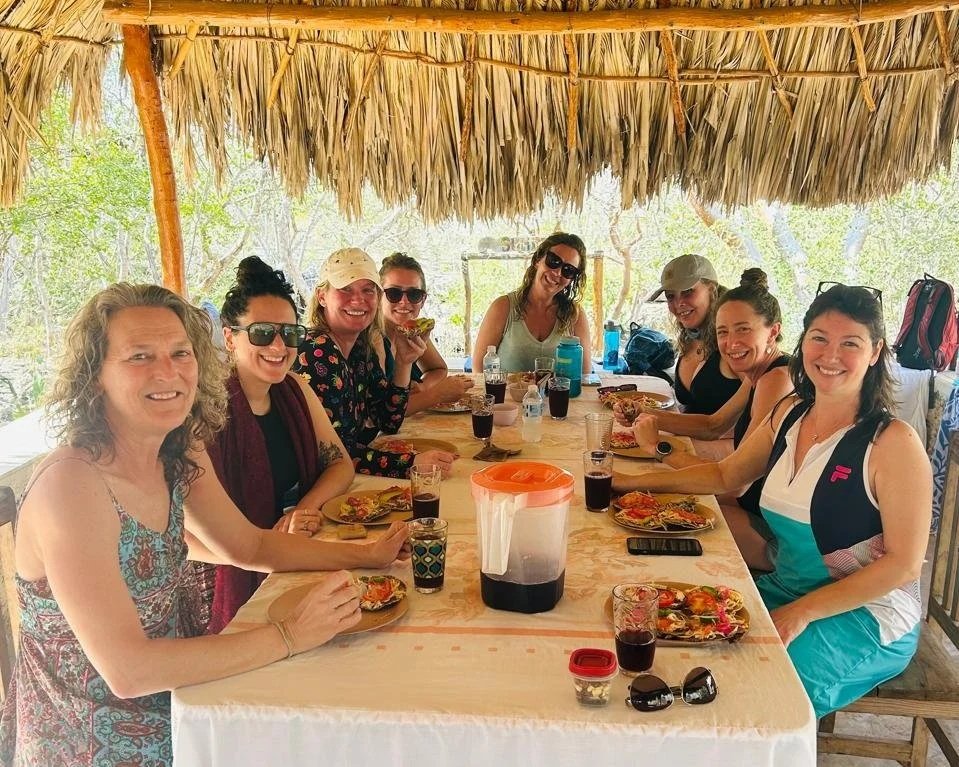
The Sol Journey Women’s Retreat
For thousands of years, humans survived because of community—not in spite of it, but because of it.
Our ancestors didn’t ask if they could make it alone. The idea would have been absurd. One person hunting, gathering, protecting themselves from the elements, illness, or predators? Survival depended on the group.
People hunted together. Built shelter together. Raised children together. They mourned together and celebrated together. When someone was sick, the community cared for them. When a child was born, experienced hands guided the mother. When someone died, the community held the grief.
This wasn’t sentimentality. It was survival.
And for thousands of years, across the world, it worked.
The Village We Lost
You’ve heard the saying: “It takes a village to raise a child.”
Today it almost sounds like nostalgia—something we say while living increasingly isolated lives. But the phrase exists because it’s deeply true.
Every stage of life requires support: pregnancy, birth, childhood, illness, loss, aging, and death. None of these were meant to be navigated alone.
Yet somewhere along the way, we started believing we should.
The Cost of Going It Alone
Modern individualism asks us to carry burdens that were never meant for one person.
We call it independence. We call it freedom.
But often, it’s lonely.
Research confirms what our ancestors knew instinctively: isolation harms us. Loneliness is linked to depression, anxiety, heart disease, cognitive decline, and even premature death.
Yet we’ve built entire systems—cities, work culture, housing, even digital life—that separate us from one another and call it progress.
You become responsible for everything: income, housing, food, childcare, emotional wellbeing. When a crisis hits—illness, loss, heartbreak—you’re expected to handle it alone.
Online communities try to fill the gap, but they aren’t the same. Real trust requires presence. It requires time, shared experiences, and showing up for one another.
Relearning Community
The truth is, many of us simply forgot how to live in community.
We forgot how to communicate honestly. How to compromise. How to stay when things get uncomfortable.
So today we build community intentionally. We look for our people through friendships, wellness groups, professional networks, spiritual circles, and shared interests.
In some ways, this is beautiful. Unlike earlier generations bound by geography or family, we can choose communities aligned with our values.
But it still requires effort—and courage.
Why Community Matters
Community isn’t just emotionally fulfilling. It’s practical.
Health and Care: People recover faster and age better when supported by others.
Economic Resilience: When money circulates locally, everyone benefits.
Belonging and Purpose: Community gives identity beyond individual success.
Environmental Responsibility: When people are rooted in a place, they protect it—because their future depends on it.
A Real Example: Sisal and the Mangroves
Here in Yucatán, the small coastal town of Sisal offers a powerful example.
Sisal’s coastline is surrounded by mangrove forests—some of the most important ecosystems on the planet. Mangroves protect the coast from storms, prevent erosion, filter water, store carbon, and provide nurseries for fish.
By resort-development standards, mangroves can be seen as inconvenient. They take up beachfront land that could be developed.
But the people of Sisal understand something deeper: their survival is tied to the mangroves.
Fishing sustains the local economy, and the mangroves nurture the fish. They protect homes from storms and preserve the coastline.
So the community chose protection instead of exploitation.
Residents organized together. They worked with authorities to create protections and began mangrove reforestation projects. Throughout the town, signs explain why these ecosystems matter—not as marketing, but as a shared understanding.
The people of Sisal remember something many places have forgotten: individual wellbeing depends on collective wellbeing.
Remembering How to Belong
This is what we’re being called to remember.
We are not meant to do life alone.
Community isn’t a luxury—it’s foundational.
Somewhere along the way, we became so focused on independence and self-sufficiency that we forgot what belonging feels like. The safety of being known. The strength of being supported.
But your body remembers. Your soul remembers.
There’s a part of you that knows you’re meant to belong.
Rebuilding community doesn’t happen overnight. It happens slowly, through trust, vulnerability, and showing up for one another.
It’s not a grand gesture.
It’s the small, consistent choice to stay connected.
Because the truth is simple:
Humans have always survived together.
And more than that—we’ve always belonged together.